
Words matter. They provide direction. They help us understand where we are, whether we are improving and what needs to happen next. Words can move us from being to becoming.
But just because something is trite doesn’t mean that it’s right.
There are six words I hear constantly in baseball: development, process, training, lab, exposure and coach.
I’ve used all six—including incorrectly at times. But intentionality has forced me to become more disciplined about what these words actually mean.
That matters for every athlete. It especially matters for Black boys navigating a baseball system where time, money and access are too valuable to waste.
1. Development
Everybody says players need to “develop.”
But how do we know when development is actually happening?
I define development as the deliberate effort to value and empower learners to obtain personal mastery and excellence through nurturing training.
Development requires assessment.
Where did you start? Where are you now? What improved? What still needs work?
If we aren’t assessing, we’re guessing.
Development can be uncomfortable because measurement can reveal that something isn’t working.
But development is hard. It should be.
2. Process
“Trust the process” might be one of the most overused phrases in sports.
My response is simple: What is the process?
I define process as purposeful repetition orchestrated through conviction, experience, structure and the scaling of success.
A process needs a starting point, an ending point and measurable checkpoints in between.
Sometimes the measurement tells you to keep going.
Sometimes it tells you to stop and change direction.
You cannot trust a process that hasn’t been defined.
3. Training
Everything we call training isn’t training.
Sometimes we’re practicing.
Sometimes we’re simply participating.
Talent is what you do well.
A habit is what you do well repeatedly without thought.
A skill is what you do well repeatedly without thought while under stress.
Practice builds habits. Training develops skills.
That means training requires eustress—positive, purposeful stress that challenges you to execute when the environment becomes difficult.
If there’s no stress, you’re probably not training.
4. Lab
I started using the word “lab” around 2010 after my business coach, Pat Alacqua, challenged me to differentiate what I was doing from traditional lessons.
A lesson often sets up the next lesson.
A lab should produce measurement.
Pre-assessment. Work. Post-assessment.
What changed?
What improved?
What needs to happen next?
What gets measured gets improved.
Today, “lab” is everywhere in sports. But putting the word on a building, program or Instagram bio doesn’t make something a lab.
Without assessment and measurement, it’s just a word.
5. Exposure
Exposure and being exposed are not the same thing.
Exposure happens when developed habits and skills are intentionally showcased to the right evaluators based on what they are actually looking for.
Being exposed happens when you’re placed in an environment that demands skills you haven’t developed yet.
Showing up doesn’t equal exposure.
Wearing a baseball uniform doesn’t make you an elite baseball player. Playing for a team with “Elite” in its name doesn’t make you elite either.
Before asking, “How can I get more exposure?”
Ask: “What exactly do I have that’s ready to be exposed?”
Develop first. Showcase second.
6. Coach
This may be the most important word of the six.
I liken coaching to medicine because coaching is a specialty.
We wouldn’t want someone without the necessary knowledge and preparation diagnosing and treating us simply because they love medicine.
Yet in sports, loving the game is often enough for someone to call themselves a coach.
My wife, Kelli, and I created “Pedagogy for Pros” to establish a framework for coaching as a discipline.
For us, coaching means:
C — Cultivate growth
See the learner and what can become.
O — Create opportunities
Create environments where learning can occur.
A — Advance progress
Move the learner forward through intentional development.
C — Build confidence
Help competence become belief.
H — Harmonize
Create a shared journey of learning between coach and learner.
A coach shouldn’t simply tell players what to do.
A coach needs a system for helping them become.
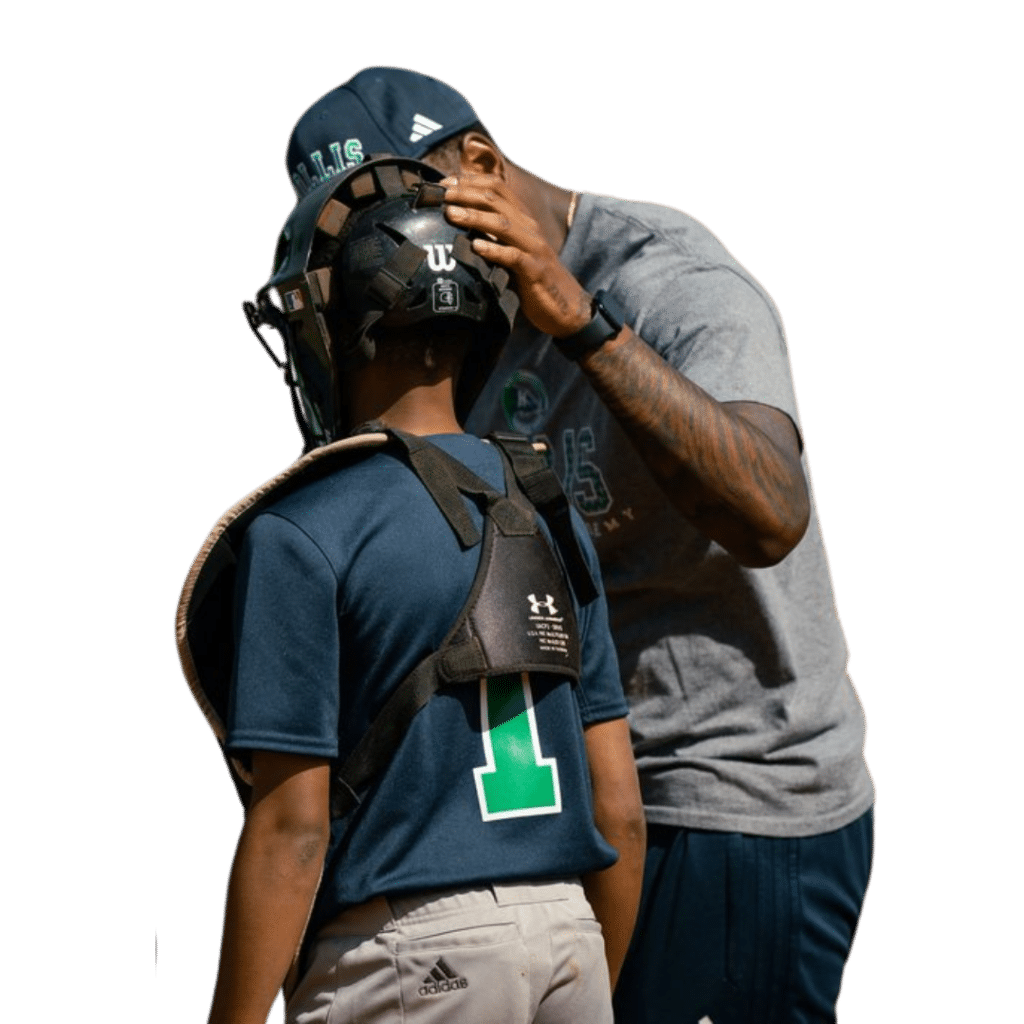
Why This Matters for Black Boys
Baseball doesn’t need more buzzwords.
Black boys don’t need more promises built around undefined words.
They need clarity, competency, measurement and accountability.
If you tell a Black boy he needs development, define development and assess it.
If you tell him to trust the process, show him the process.
If you say he’s training, create an environment where skills are being developed under stress.
If you call it a lab, measure something.
If you promise exposure, make sure he’s prepared for what evaluators are looking for.
And if you call yourself a coach, commit yourself to becoming competent at the craft of coaching.
Sports are powerful because people come to experience something that leaves them in awe.
As a baseball coach, I want our game to become stronger. I want players developed with enough intentionality and excellence that their performance creates that awe.
And I especially want Black boys to have the systems, standards and coaching necessary to become a source of that awe.
Because words matter.
Define them. Measure them. Live them.
That’s the Fix for Six.
Remember: Intelligence tops being smart.
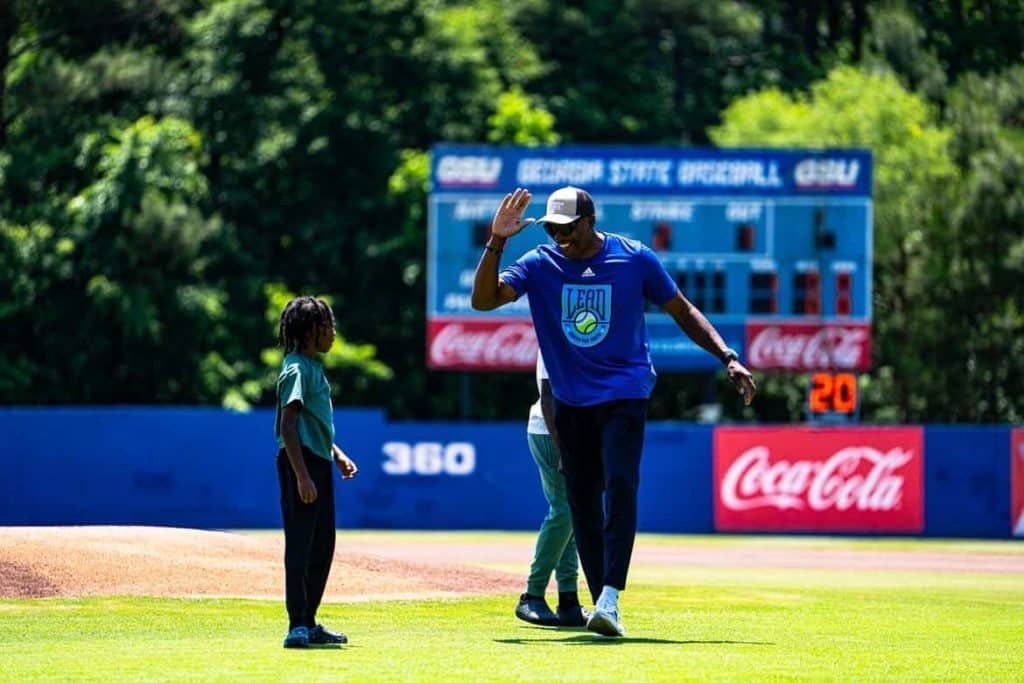
For more information, visit L.E.A.D. Center for Youth today.
If you found this inspiring and thought-provoking, or if you have any questions, comments or concerns, add me on Discord and let’s go deeper.
C.J. Stewart has built a reputation as one of the leading professional hitting instructors in the country. He is a former professional baseball player in the Chicago Cubs organization and has also served as an associate scout for the Cincinnati Reds. As founder and CEO of Diamond Directors Player Development, C.J. has more than 22 years of player development experience and has built an impressive list of clients, including some of the top young prospects in baseball today. If your desire is to change your game for the better, C.J. Stewart has a proven system of development and a track record of success that can work for you.